

Six million travellers pass through Dubai airports amid regional crisis
More than 32,000 flights operated despite severe routing challenges
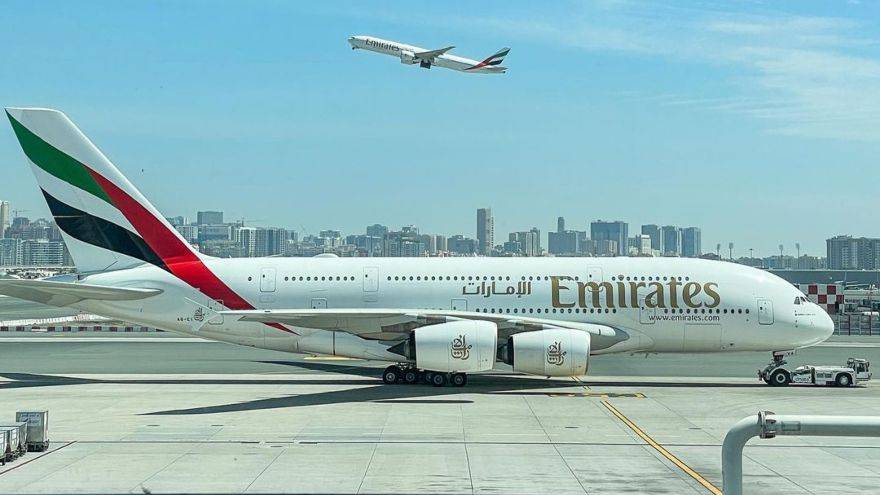
DUBAI – Dubai International Airport maintained operations through weeks of regional disruption, handling 6 million passengers between late February and April 30.
Despite widespread airspace constraints that forced schedule changes across the aviation network, Dubai’s airports continued to support global connectivity at reduced but steady capacity.
During this period, more than 32,000 aircraft movements were recorded, alongside 213,000 tonnes of cargo, reflecting the scale of operations maintained under pressure.
Operational response
DXB remained open throughout the disruption, adapting continuously to changing airspace availability. Flight schedules and routes were adjusted in real time, ensuring that passenger and cargo flows continued despite limited capacity.
This was made possible through close coordination across airlines, ground handlers and air traffic authorities. The ability to align operations quickly with available routing options proved critical in sustaining service continuity.
Collaboration across the airport ecosystem, including Emirates and flydubai, enabled Dubai to maintain its role as a key global transit hub even at the height of the disruption.
Traffic impact
The effects of the crisis were clearly visible in first-quarter performance. DXB welcomed 18.6 million passengers in Q1 2026, marking a 20.6 percent decline year on year.
DXB welcomes 18.6 million guests in the first quarter of 2026. pic.twitter.com/SPCxxwFrkJ
— Dubai Media Office (@DXBMediaOffice) May 4, 2026
March was particularly affected, with passenger traffic dropping to 2.5 million, down 65.7 percent compared to the same period last year. Aircraft movements totalled 88,000 for the quarter, a decline of 20.8 percent.
Cargo volumes reached 399,600 tonnes, down 22.7 percent, with 66,000 tonnes handled in March alone. Despite these pressures, operational efficiency remained relatively strong.
Baggage handling
DXB processed 17.6 million bags during the quarter, including 2.6 million in March. The mishandled baggage rate stood at 3.5 per 1,000 passengers, compared to 1.95 in the same period last year.
While higher than previous performance, this remained significantly better than the global average of around 6.3 mishandled bags per 1,000 passengers, highlighting operational resilience under strain.
Market trends
India remained the largest country market with 2.5 million passengers, followed by Saudi Arabia at 1.3 million, the United Kingdom at 1.2 million and Pakistan at 918,000.
London was the busiest destination city with 752,000 passengers, ahead of Mumbai at 520,000 and Jeddah at 505,000.